FordLabs
Online workspaces often lack the organic interactions that in-person workspaces provide. Fordlabs tasked us with developing a solution that would enable these kinds of interactions virtually.
FINAL SOLUTION:
Our final solution incorporated our three design prototypes that we experimented with: The Pinterest-Inspired Event Planner, the Office Newsletter, and the Raid Notifications.
final design
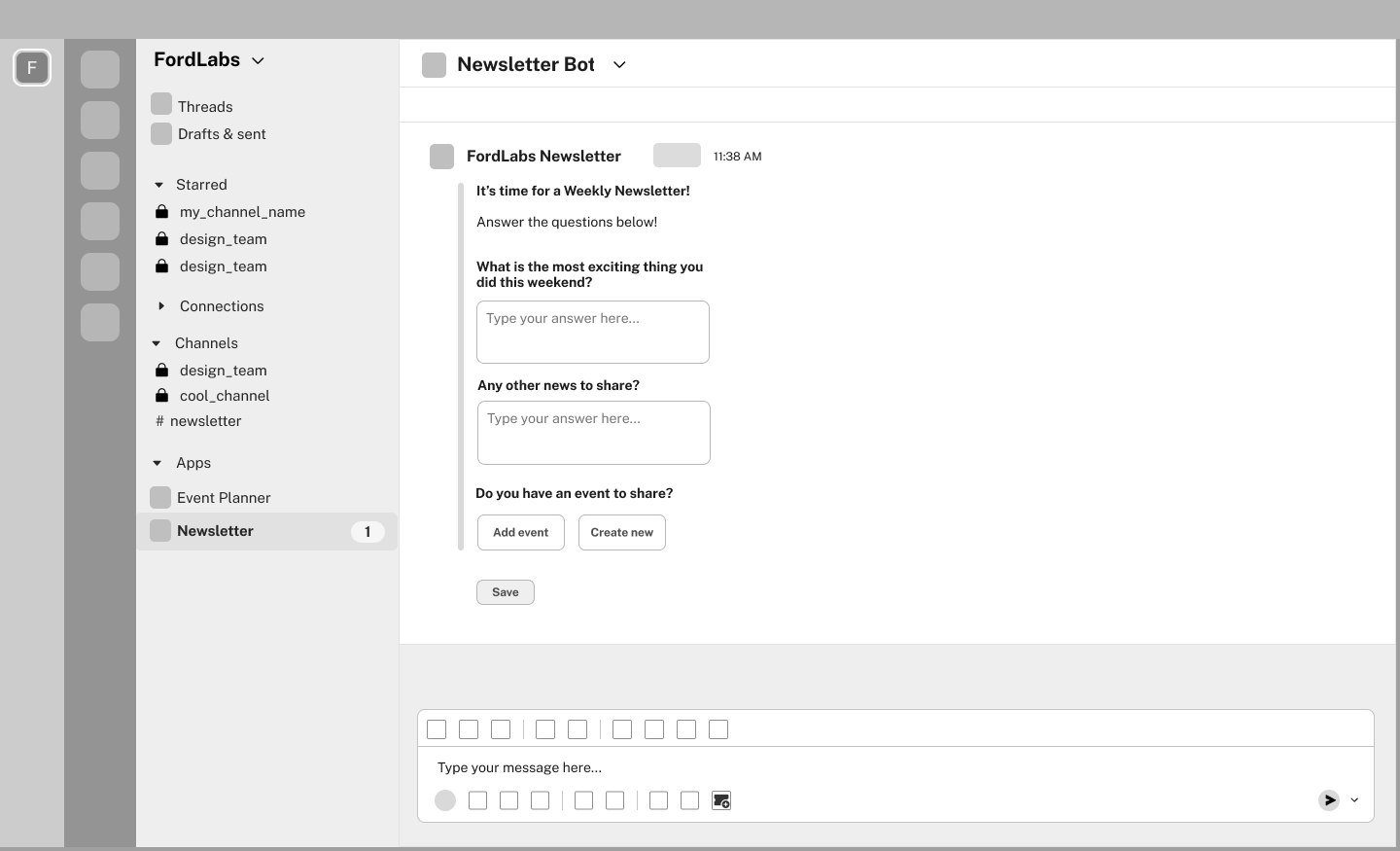
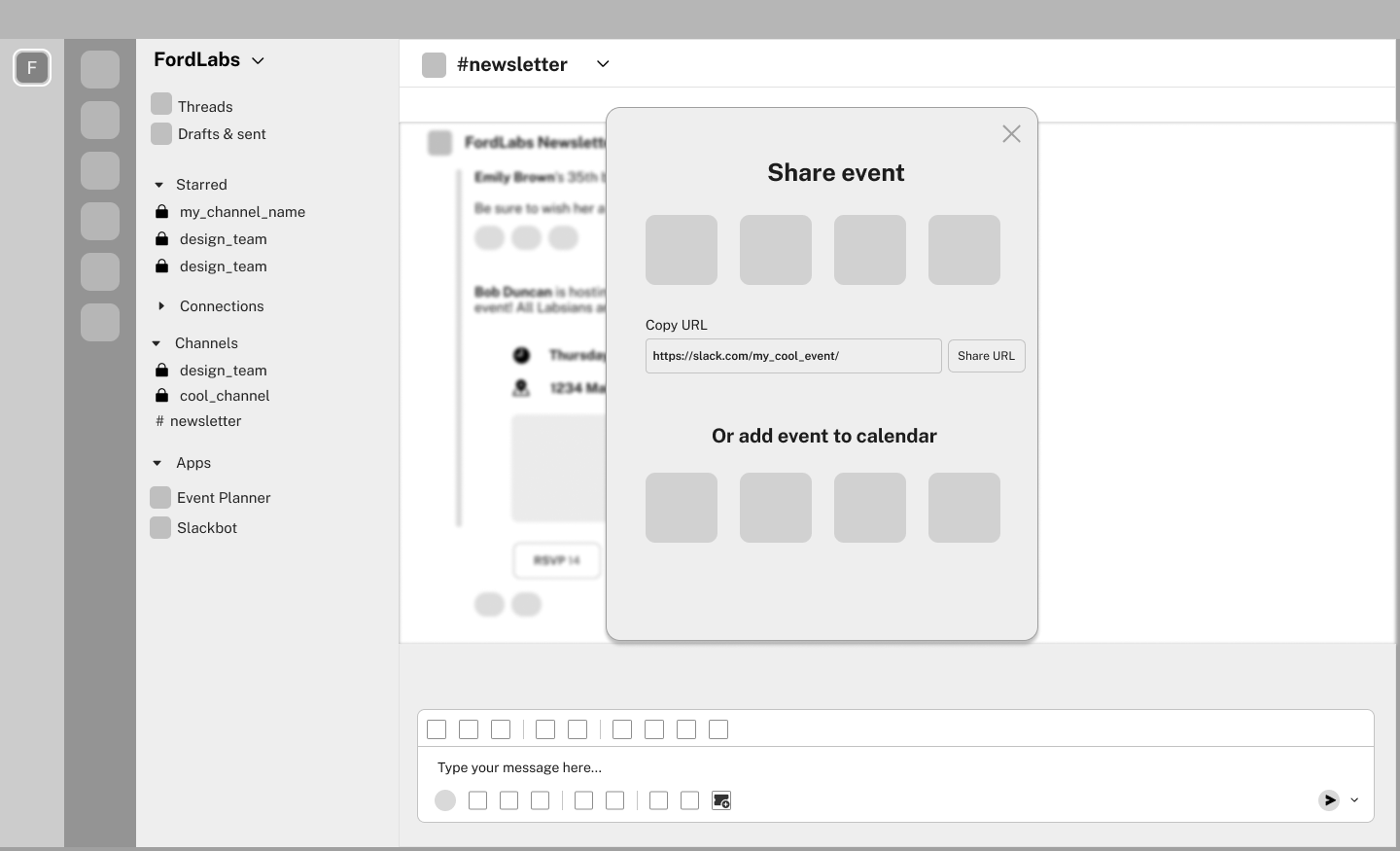
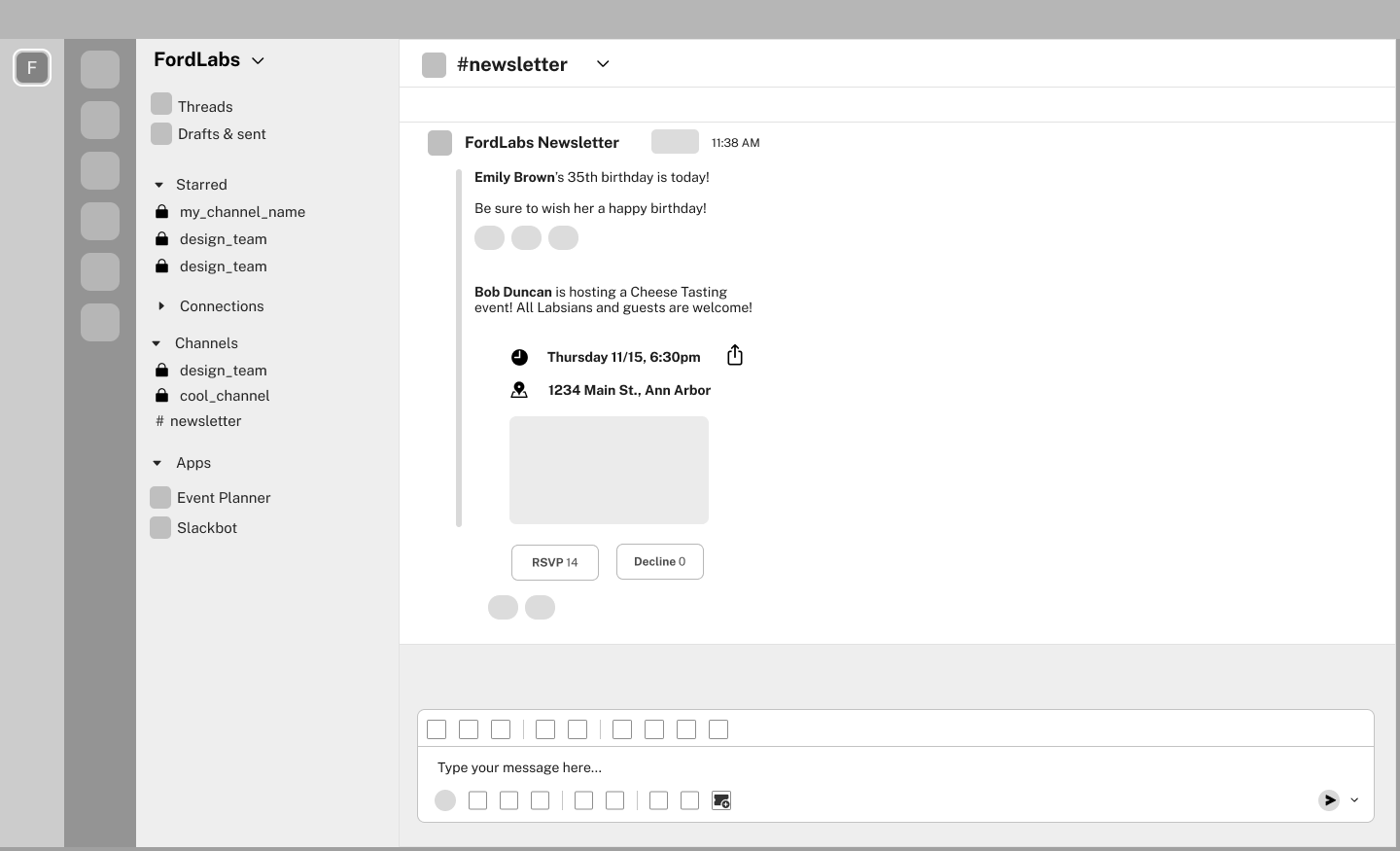
We focused a lot on refining our design of the newsletter, as it was listed as the solution that would allow for the most organic, in-person-like interactions. Our updated design allowed users to share existing events, host their own community gatherings and initiate discussions to facilitate out of work relationships and connections.
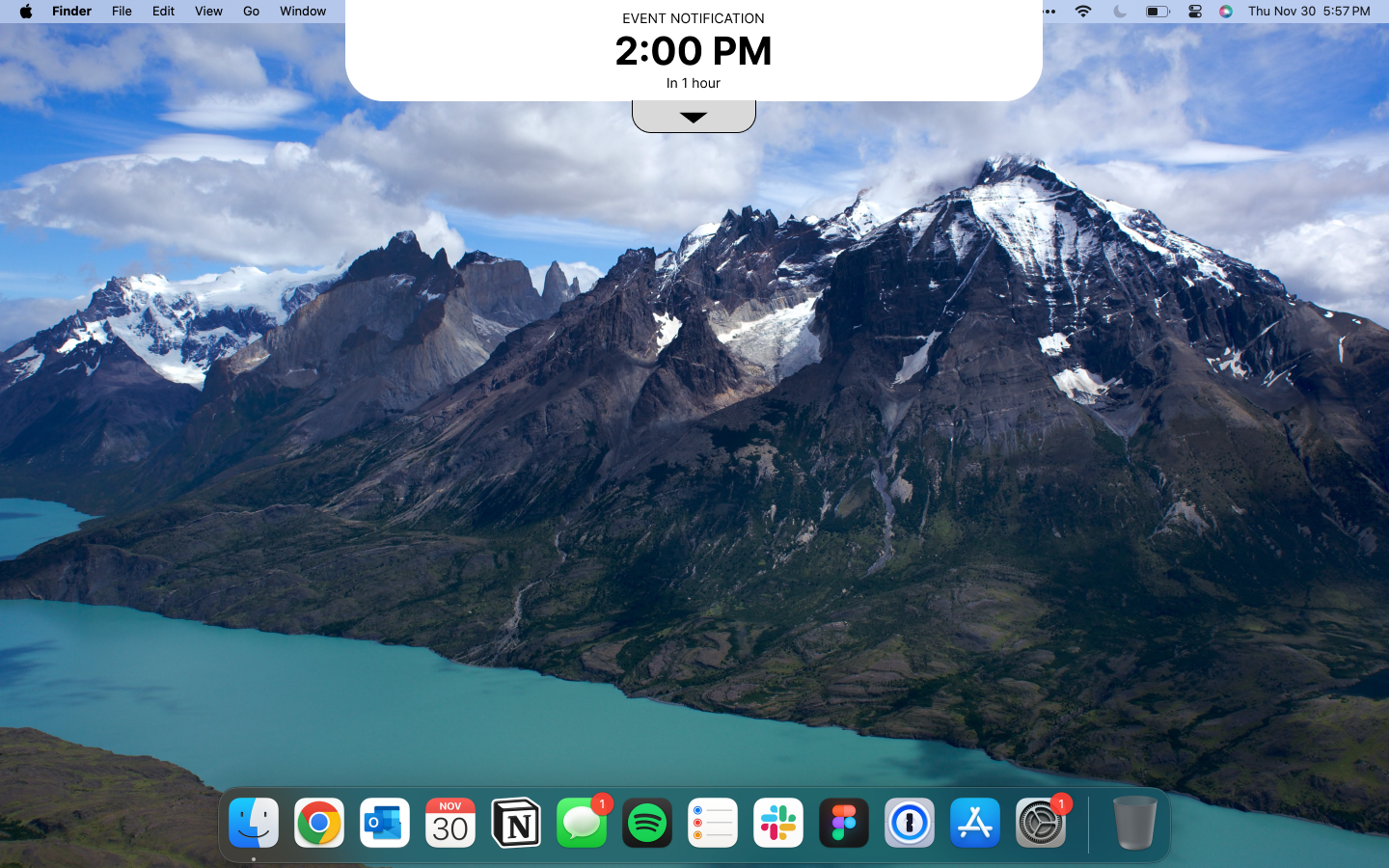
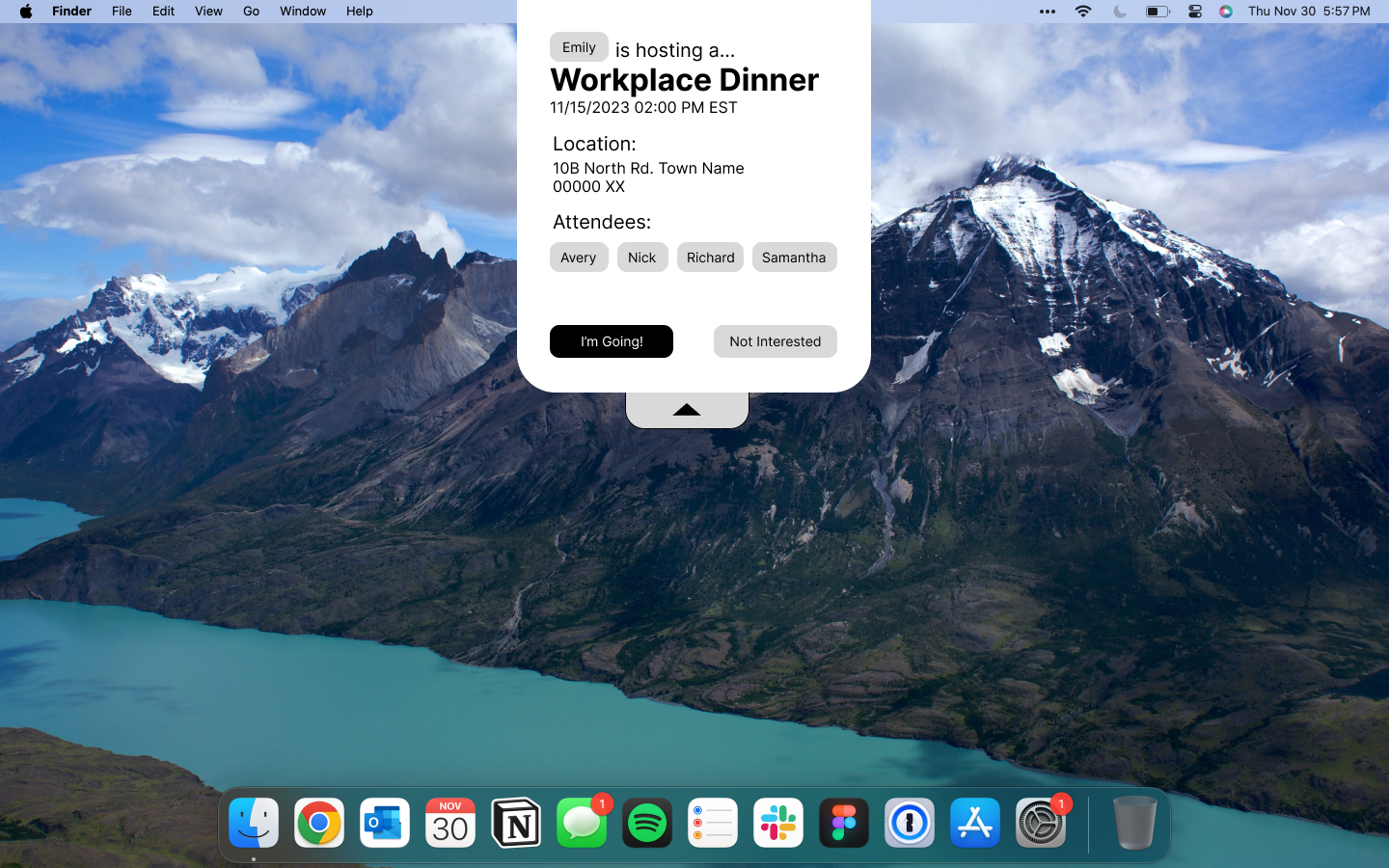
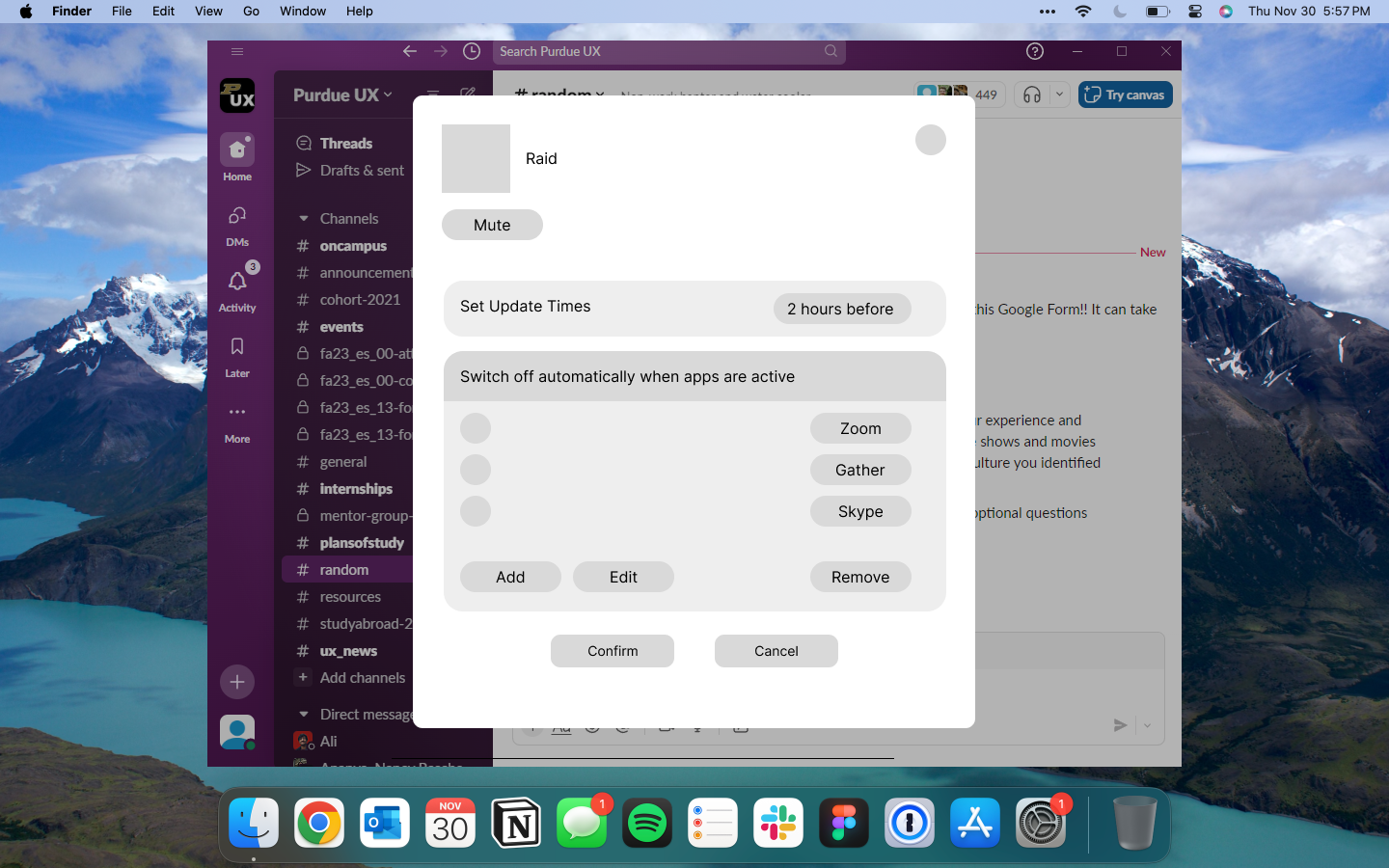
Our raid notification would be able to show users who was attending which event, as well as alert users before events were scheduled to begin. Users could also opt out of being notified if they had applications open, which indicated they were busy with work.
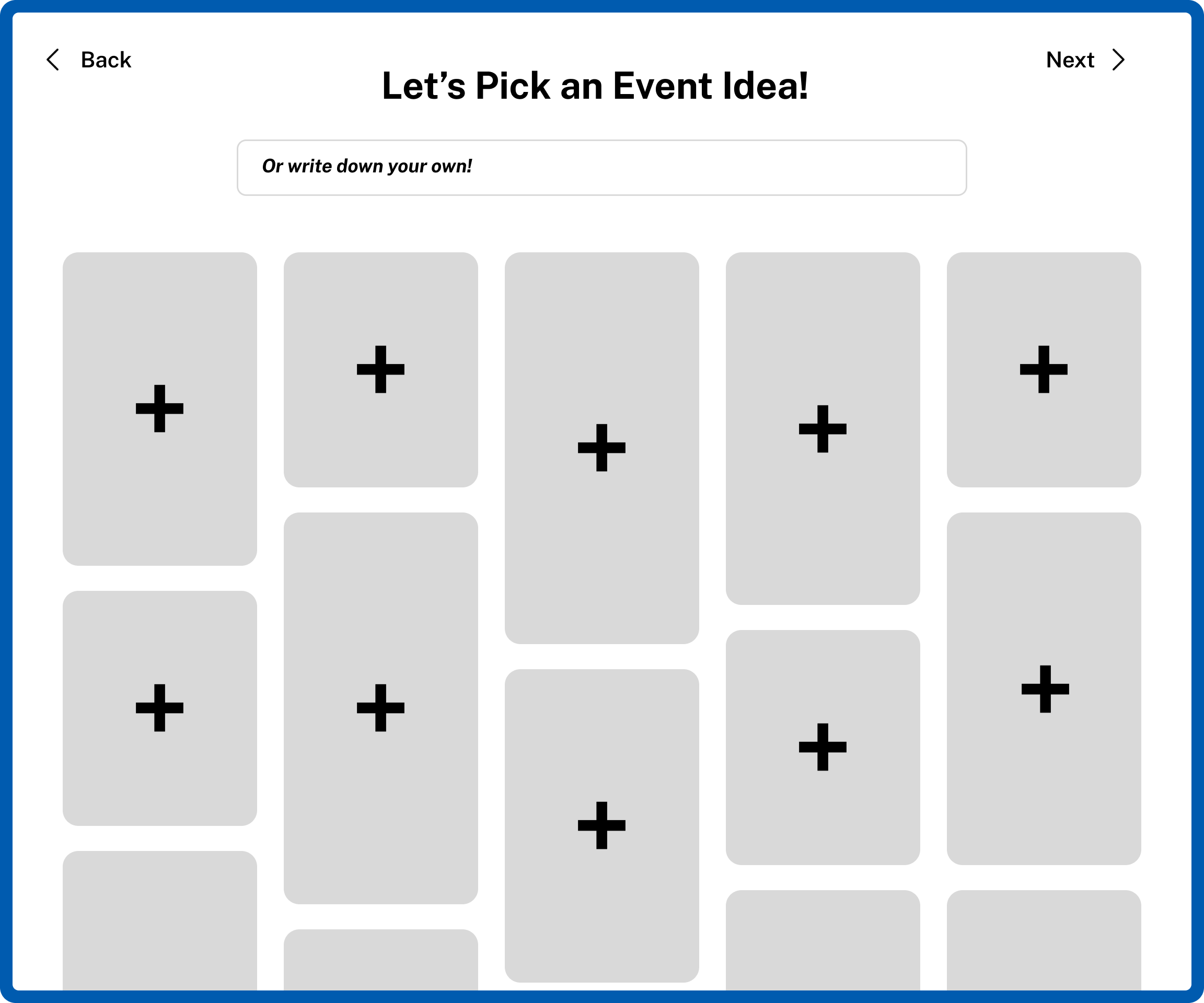
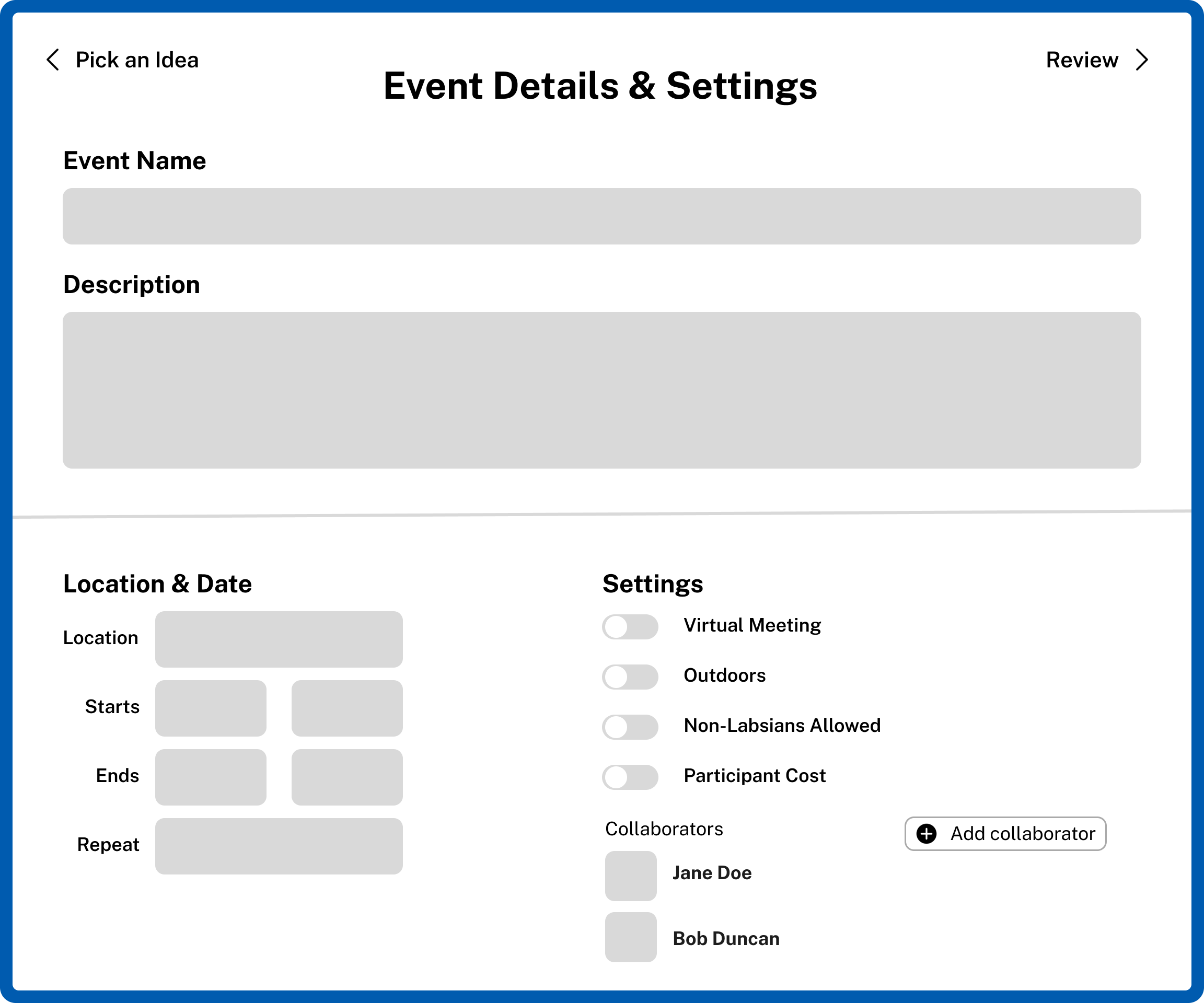
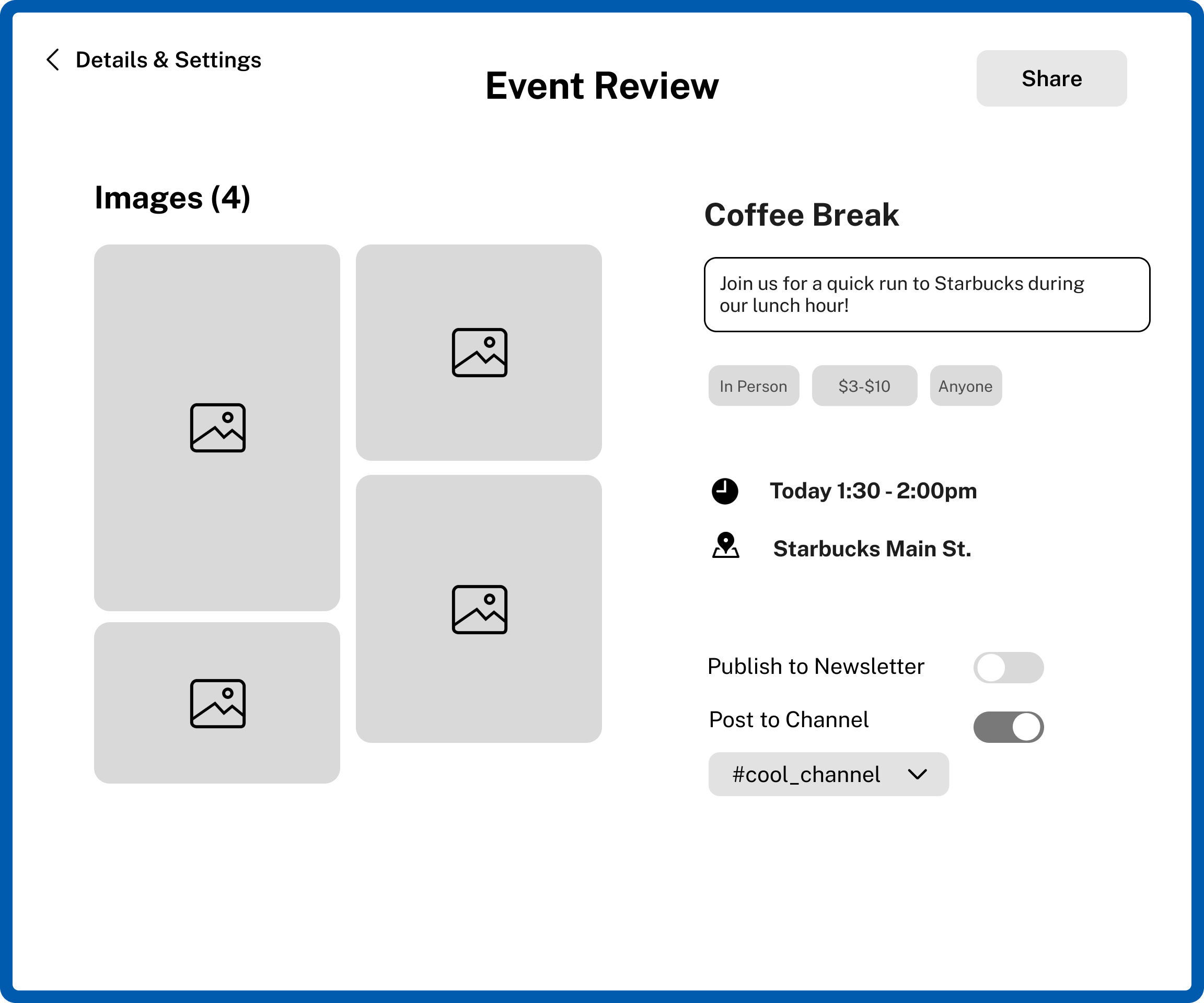
We developed our Pinterest event planner idea, allowing users to choose from a set of pre-generated ideas, or creating their own events to host for their co-workers.
bACKGROUND
Fordlabs is an innovative, data-driven group that collaborates with Ford in developing software solutions for customers. They wanted us to create an application for company use that would allow them to simulate natural, in-person interactions in a virtual space.
USER GROUP
The user group we targeted in this project were Fordlab employees who would be utilizing our solution in the future.
Research
Secondary Research

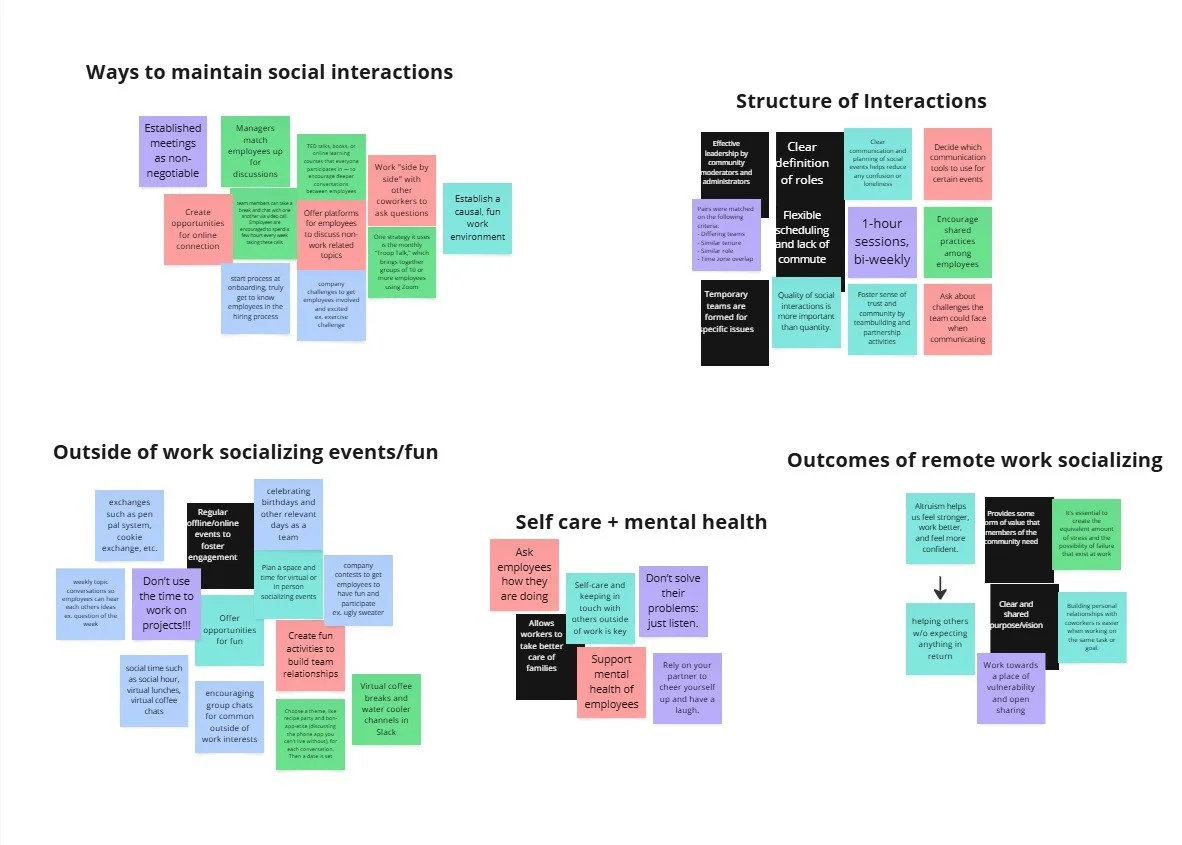
We found, through research, that in-person interactions could be recreated by keeping a casual work environment, and allowing the discussion and organization of non-work related topics and events.
Comparative Analysis
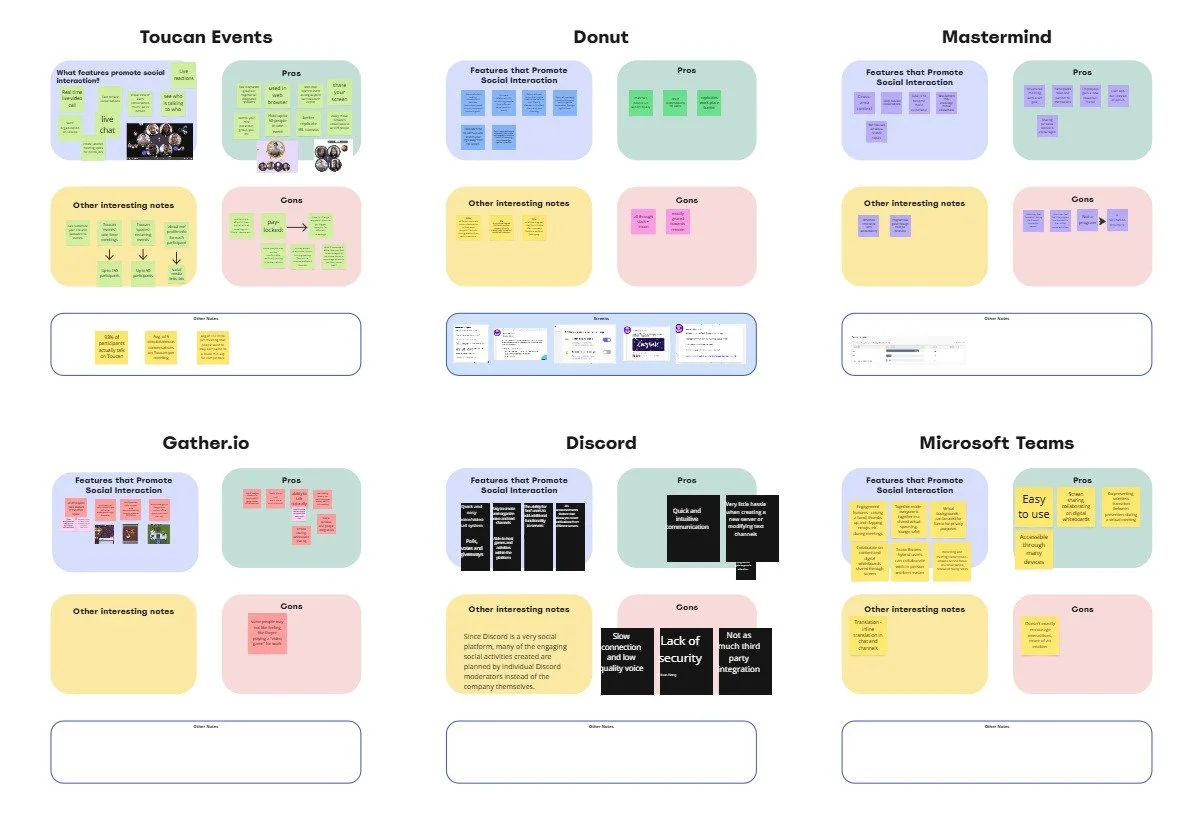
We conducted research on competitors to find ways of creating a more engaging online workplace environment. We took particular interest in Donut, Gather, and Toucan.
Interviews
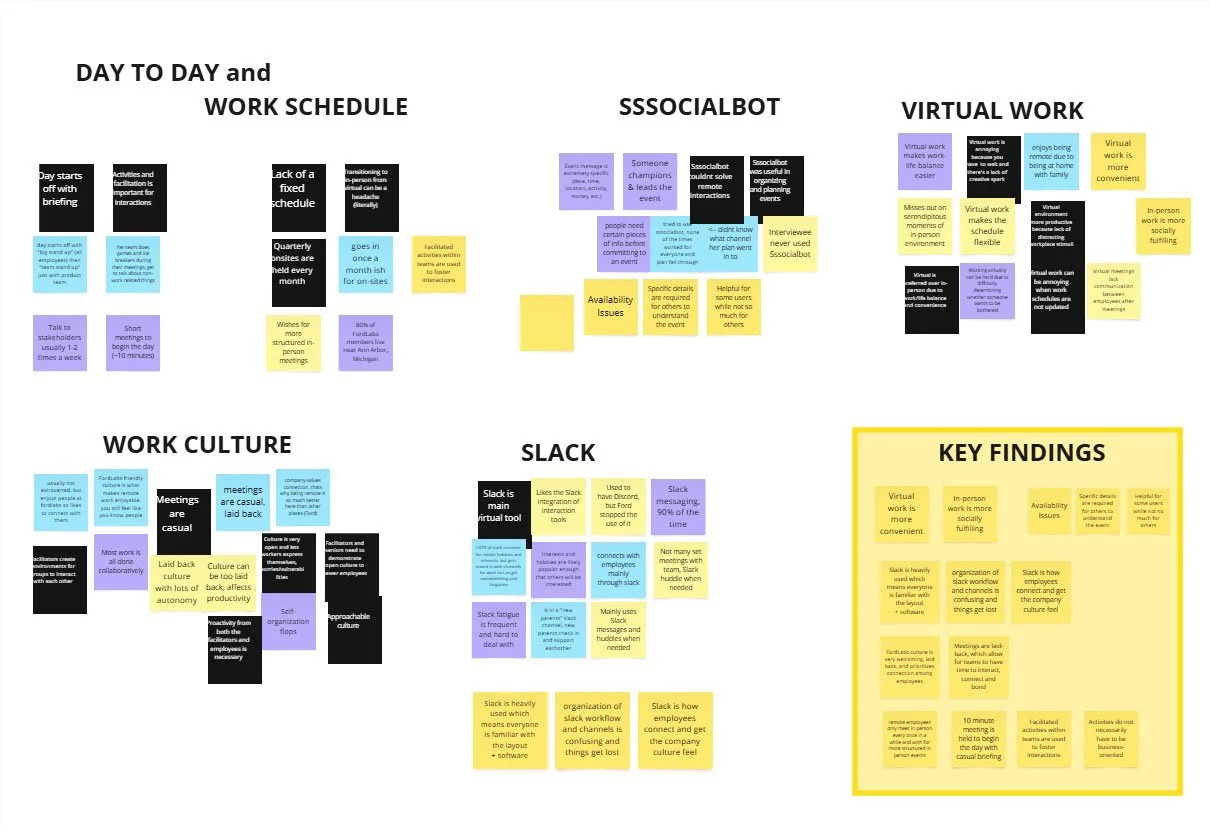
Interviews showed that Fordlabs employees enjoyed the casual, collaborative-promoting work environment. However, two points of importance they addressed were that they would like to know when their co-workers were otherwise occupied, and that they felt that they needed more social events as to not feel disconnected from company culture.
donut
gather
Gather emulated a real life working environment by providing its users with virtual avatars in a simulated, video game-like workspace. They were able to simulate meetings and activities in a physical workspace through this interface.
Donut was an add-on to slack that allowed users to sign up to be randomly paired with another user in a channel. This way, Donut helped to build connections between workers.
toucan
Toucan provided an online meeting platform much like Zoom. However, they allowed users to form breakout rooms and move between those rooms much more fluidly, more effectively simulating real-life meetings and social interactions.
Design ProcesS
Prototyping
Based off our findings, we came up with three distinct ideas that we could explore and implement into Fordlab’s current virtual culture to improve and facilitate social interactions.
Concept Testing
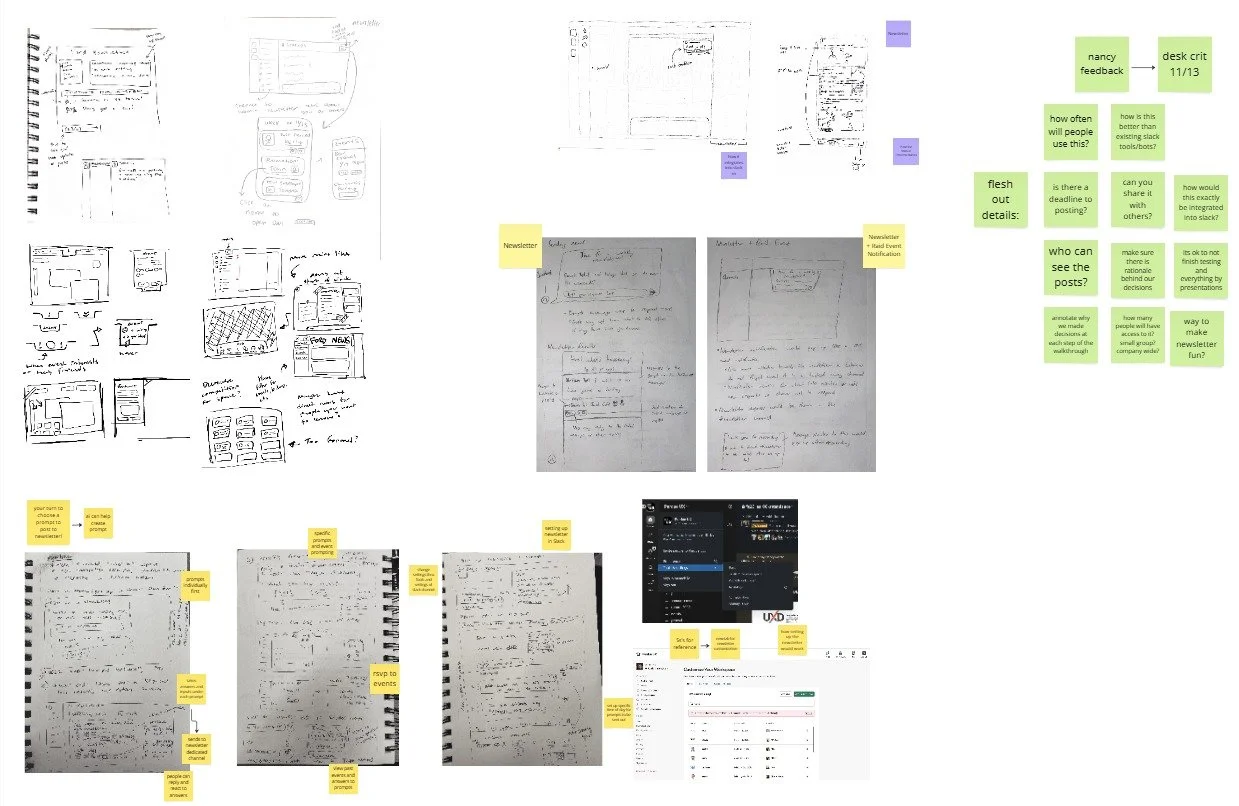
We had our user group go through our preliminary sketches to gain additional information on our designs and what our users wanted from them. Through our testing, we gained insights on all three of our proposed solutions.
Visualizing the Problem
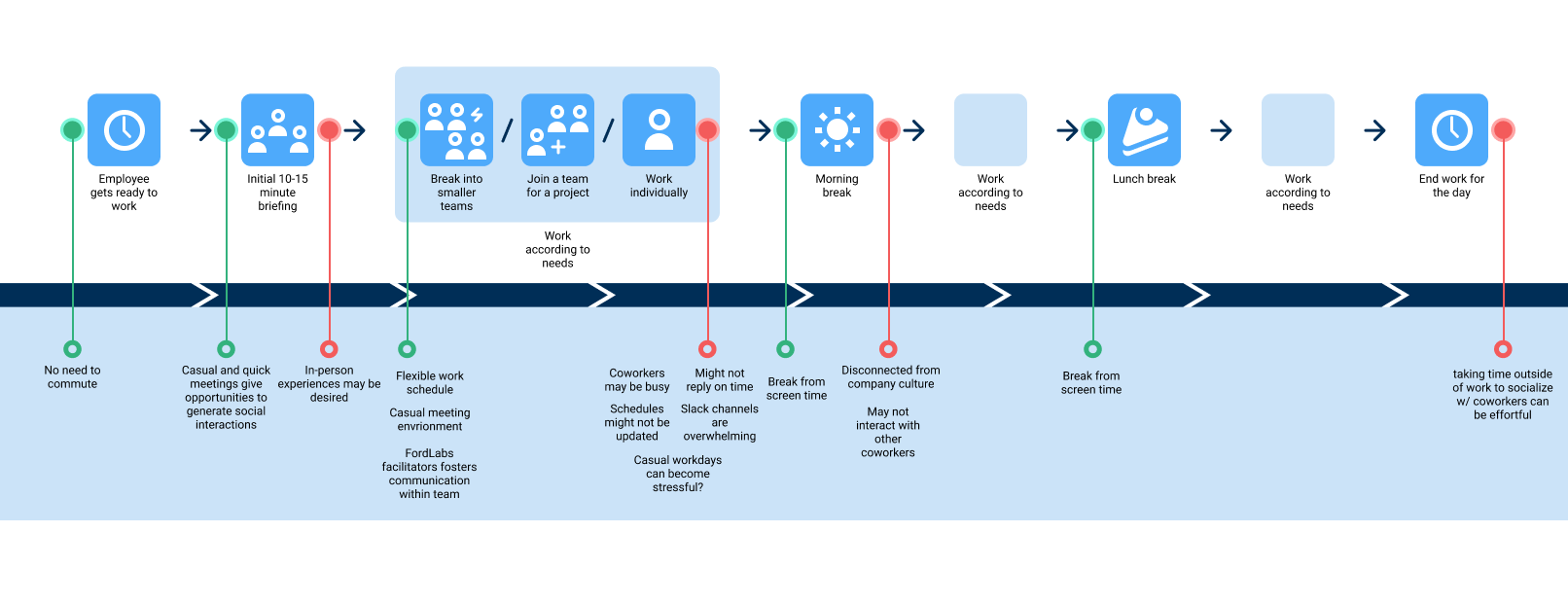
We created User Journey Maps to visualize the day of a Fordlabs Employee based off of interviews, and to find where in the user’s journey our identified problem spaces fit in.

raid event
event plannner
We would create an event planner that not only allowed users to create out-of-work events for workers to participate in, but it would also recommend event ideas like Pinterest to facilitate the creation of more events and increase the frequency of organic social interactions.
In video games, a raid event is when players join up to complete an objective. Recontextualized, we plan to update event notifications to include incentives for users to commit to events, which increases user attendance.
newsletter
To encourage company-wide connections and natural social interactions, we experimented with adding a newsletter to existing communication platforms that would allow for casual discussion.
raid event
event plannner
Users found that the event planner would be effective for organizing formally planned events, rather than spontaneously hosting them. They also wanted an option to integrate the planner into Slack.
Users wanted access to information like where and when the event is happening and who would be attending the event, as well as the ability to opt out in case they were busy.
newsletter
The newsletter was listed as the solution with the most potential to create spontaneous, causal interactions between users. While we designed for each solution, we focused on this idea the most.